Abstract
Restorative VR often relies on passive nature exposure. This work instead combines a calm natural surround with structured drawing and a physiological feedback loop that adapts during the experience.
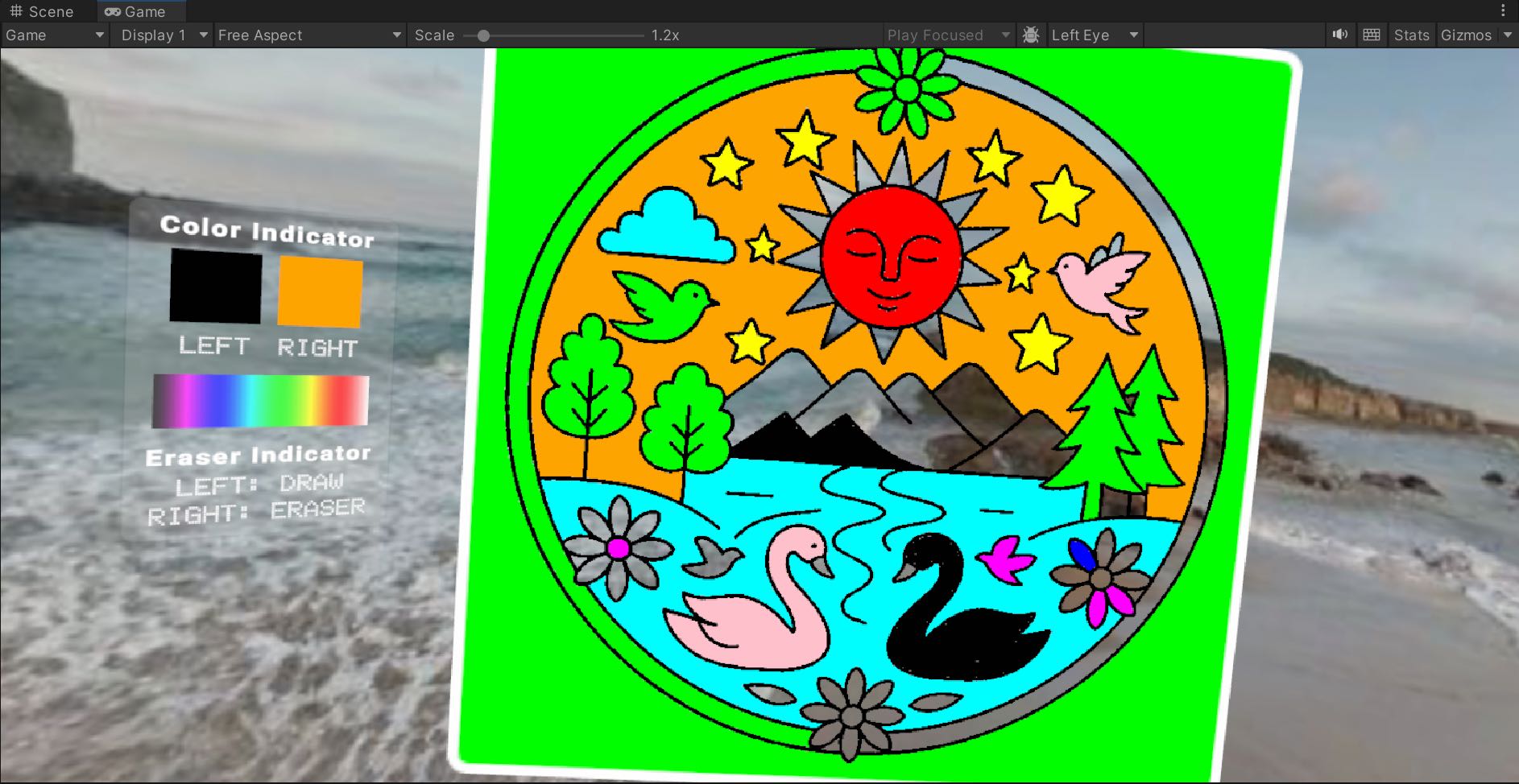
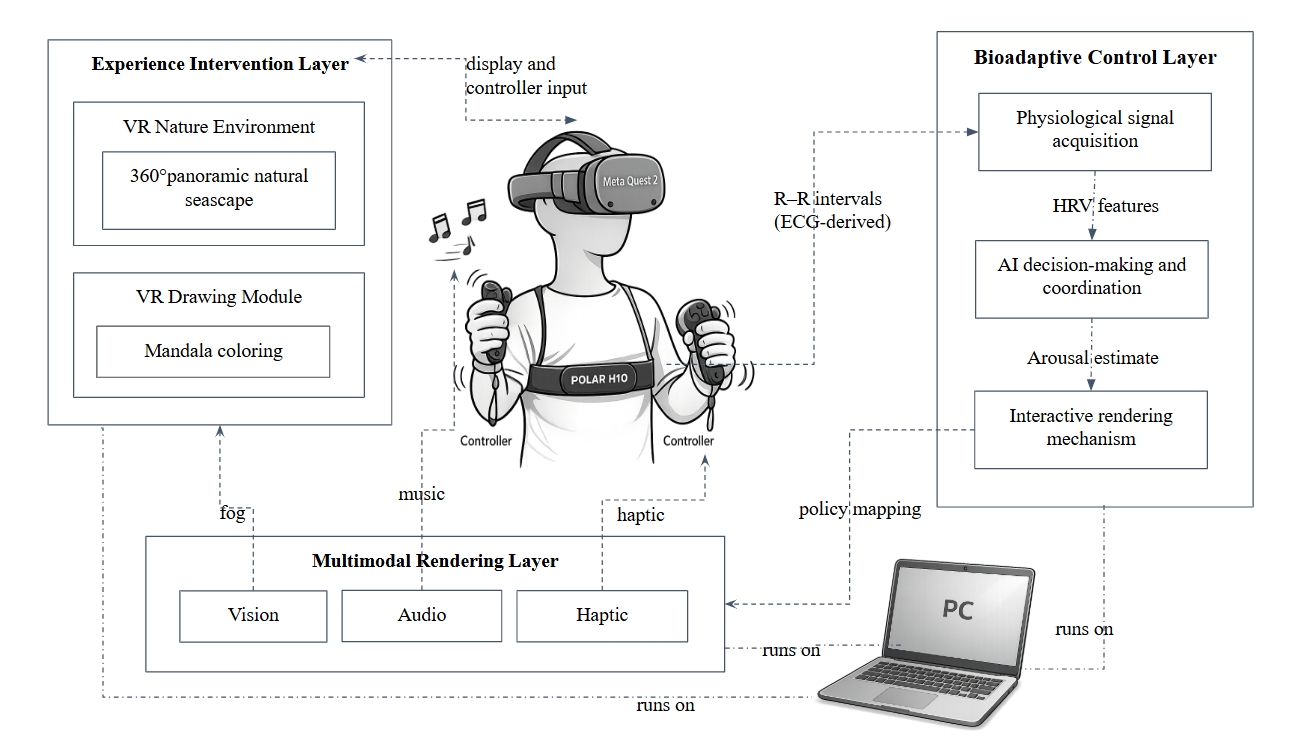
Participants color a mandala inside a static 360° seascape. Heart-rate variability from a Polar H10 informs a lightweight machine-learning controller, which personalizes visual haze, ambient audio, and synchronized controller haptics.
In a within-subject pilot study with 11 participants, both conditions were experienced as generally restorative. The bioadaptive condition produced a distinct EEG regulation pattern and an exploratory association between perceived fascination and reaction-time improvement.
System
Bioadaptive restoration loop
The experience layer, physiological controller, and multimodal renderer form a closed loop around the user's changing autonomic state.
Study
Within-subject pilot
Eleven university students completed two counterbalanced sessions on separate days. Both sessions used the same nature-and-mandala experience; only the AI condition enabled bioadaptive multimodal feedback.
Each session included a six-minute pre-intervention Oddball task, a ten-minute VR intervention, a six-minute post-intervention Oddball task, and presence and perceived-restorativeness questionnaires. The analysis combined self-report, behavioral, HRV, and EEG measures.
Because this is a small exploratory pilot with a short intervention, the results describe condition-specific patterns rather than establishing broad clinical or long-term efficacy.
Results
EEG reveals a regulatory divergence
Both conditions received broadly positive subjective ratings, while the clearest between-condition distinction appeared in arousal-related Cz beta activity.
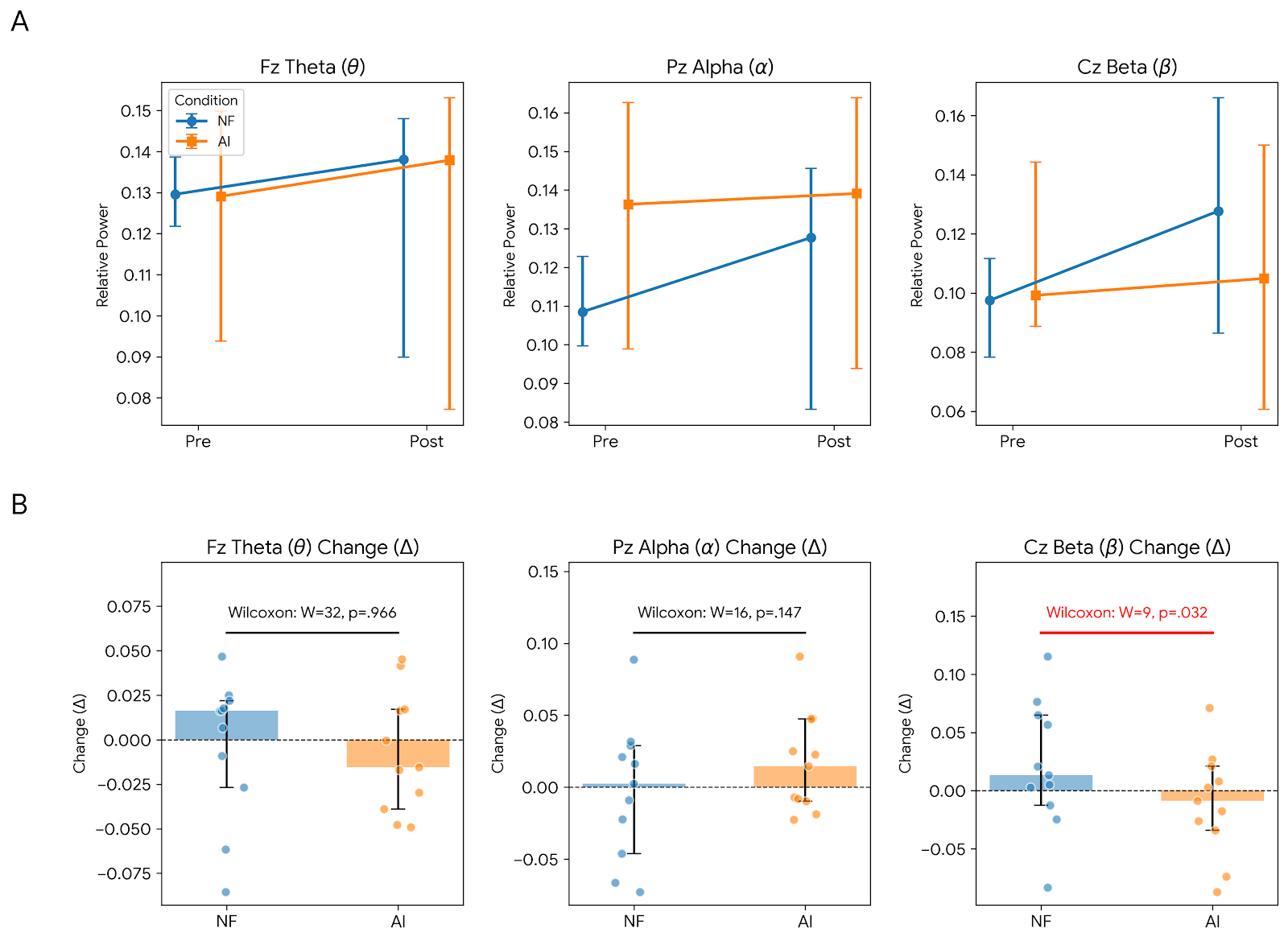
Cz beta change differed between conditions in the pilot sample (Wilcoxon W = 9, p = .032, rank-biserial correlation = −.73): NF showed a positive median post–pre change, while AI showed a negative change. Frontal theta and parietal alpha differences were not statistically significant.
Exploratory analysis
Fascination and attention recovery
Perceived fascination was associated with faster post-intervention Oddball responses only when bioadaptive feedback was enabled.
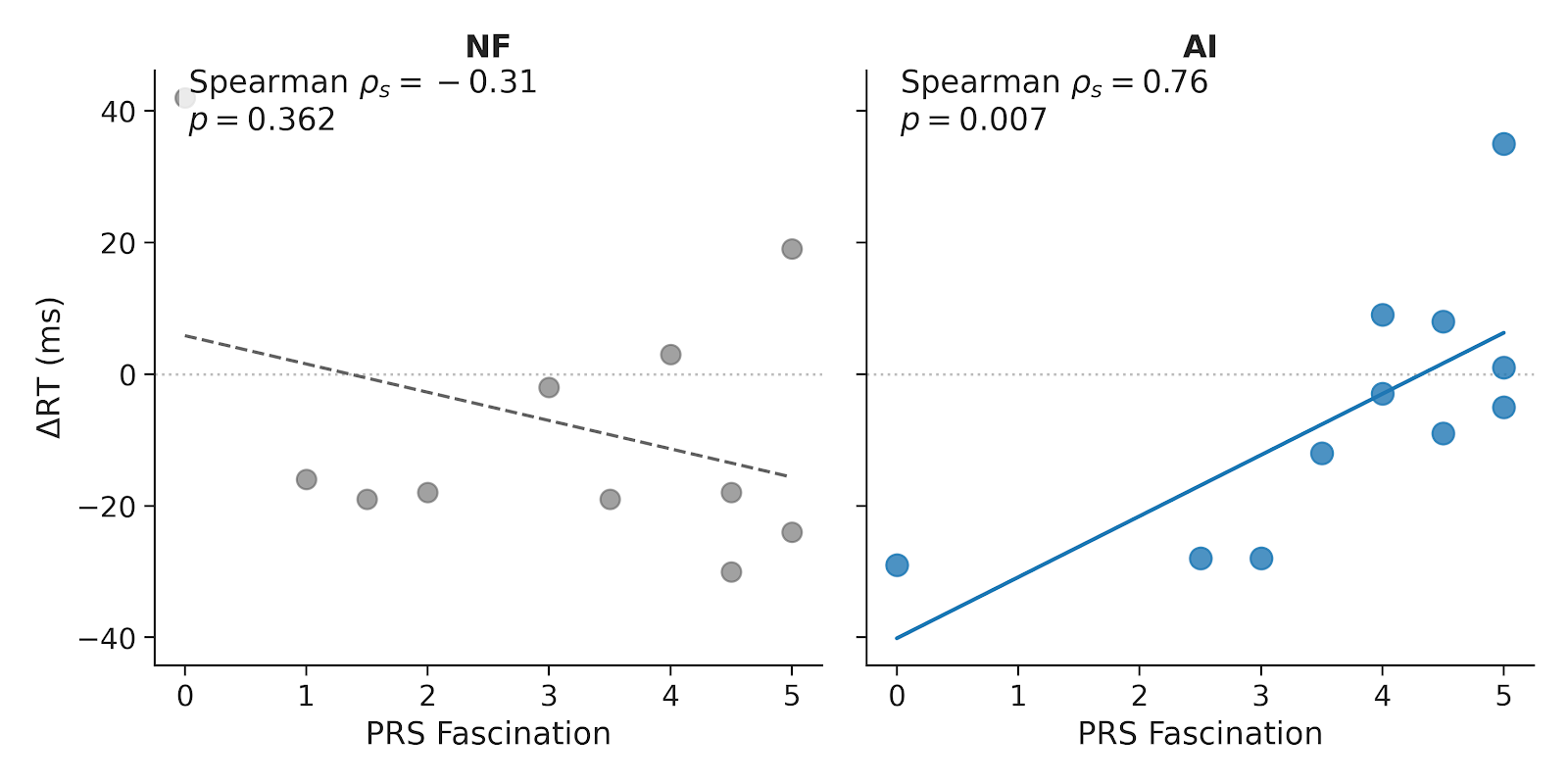
This condition-specific coupling is hypothesis-generating. Larger samples, repeated-use protocols, and factorial designs are needed to separate the contribution of multimodal stimulation from closed-loop adaptation.