Abstract
This undergraduate thesis develops a digital twin environment for exploring quadrotor UAV formation flight before deploying control logic to physical aircraft.
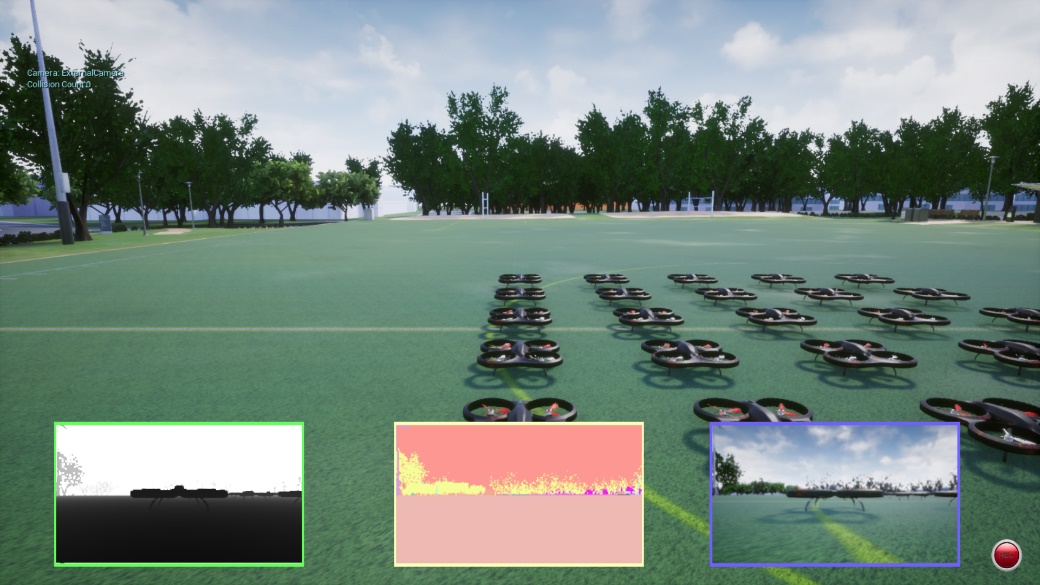
The project uses Unreal Engine 4 and Microsoft AirSim to combine a physics-based simulation, multi-UAV generation, controller and Python API input, remote PX4 communication, sensor recording, and a shared flight-data store. The resulting system supports both global formation observation and individual-aircraft views.
Functional testing demonstrated formation generation, multiple viewpoints, environmental controls, data recording, database export, and Windows–Linux remote interaction. The work also documents the practical limits of the prototype: large formations reduced rendering performance, occasional API disconnections disrupted follower aircraft, and the implemented formation controller remained a simplified follow-and-avoidance design.
Language note: the thesis and defense slides are in Chinese. This page provides an English project overview for the archive, with a browser-friendly PDF plus the original DOCX and PPTX files.
- 2022
- completion year
- 25
- UAV scale test
- 5
- system objectives
- UE 4.27
- simulation engine
Project scope
Five objectives for a usable digital twin
The thesis treats the simulator as an integrated engineering environment rather than a single formation-control demonstration.
Global formation view
Visualize the overall evolution of a quadrotor formation together with status information and operator controls.
Individual aircraft view
Inspect a selected UAV through first-person, follow, ground-observer, and chase-camera perspectives.
Shared data layer
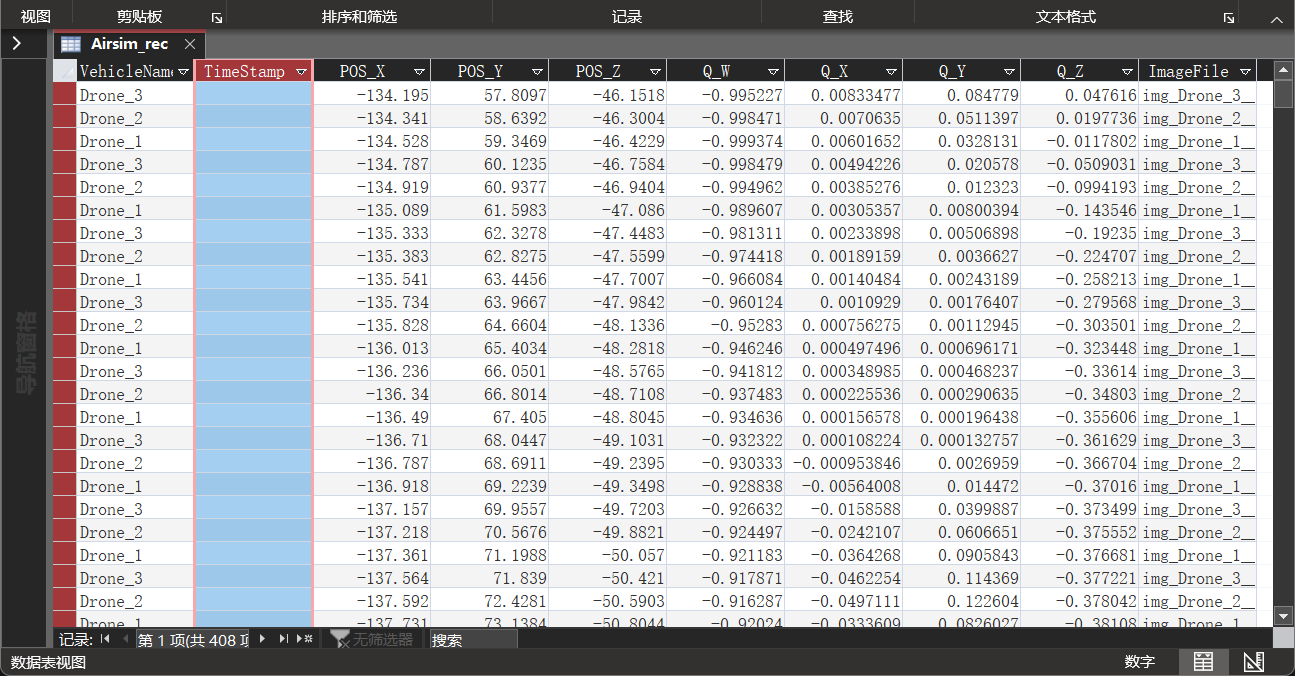
Record images, timestamps, positions, and quaternions in a consistent data structure for later analysis.
External interaction
Support remote control and information exchange, then expose recorded metadata through XML-compatible exports.
System
Simulation, control, and data in one loop
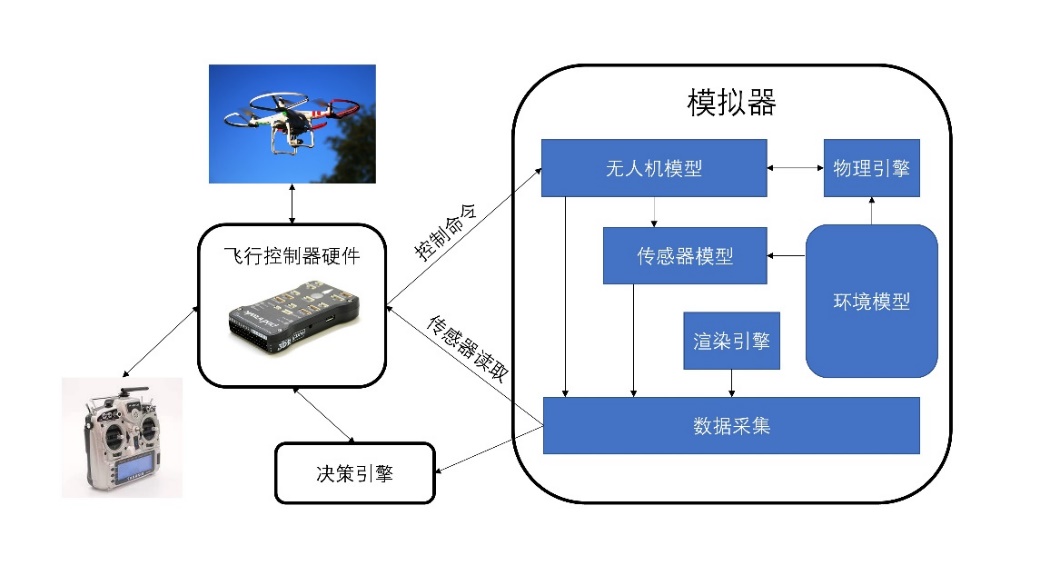
The simulator connects vehicle, sensor, environment, physics, rendering, and data modules to controller hardware and a decision layer.
Unreal Engine and AirSim
A photorealistic environment and high-frequency vehicle simulation provide the core digital-twin workspace.
Formation generation
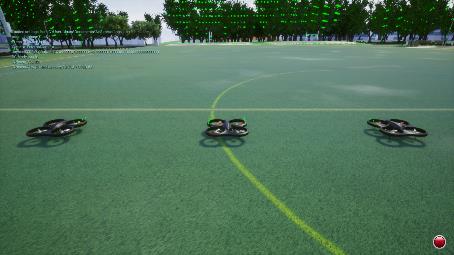
AirSim settings and Python APIs generate multiple vehicles and coordinate a primary UAV with follower aircraft.
Human and API control
An Xbox controller supports direct flight, while msgpack-RPC exposes takeoff, landing, switching, and automated movement.
Remote flight interface
PX4 and QGroundControl run in an Ubuntu client connected to the Windows-hosted AirSim environment.
Sensor recording
AirSim records camera frames together with vehicle names, timestamps, positions, and orientation quaternions.
Database and metadata
Recorded truth data is imported into an Access database and can be exported as XML with an accompanying schema.
Implementation
Prototype stack
The final implementation moved from an early Unity direction to Unreal Engine because AirSim integration was more stable there at the time.
- Engine
- Unreal Engine 4.27.2
- Simulator
- Microsoft AirSim
- Control API
- Python · msgpack-RPC
- Flight stack
- PX4 · QGroundControl
- Hosts
- Windows 11 · Ubuntu 20.04
- Data
- AirSim logs · Access · XML/XSD
Evaluation
Functional validation and practical limits
The evaluation is an engineering verification of implemented functions, not a controlled user study or a validation against physical UAV telemetry.
Five functional goals completed
The thesis reports completion of the two visual scenes, shared database, interaction interface, and metadata directory.
Twenty-five UAVs generated
The environment could instantiate 25 vehicles, but rendering load and communication stability made one-to-three UAV tests more reliable.
Windows host, Linux client
PX4 commands from Ubuntu controlled a UAV in the Windows AirSim host, demonstrating cross-system interaction.
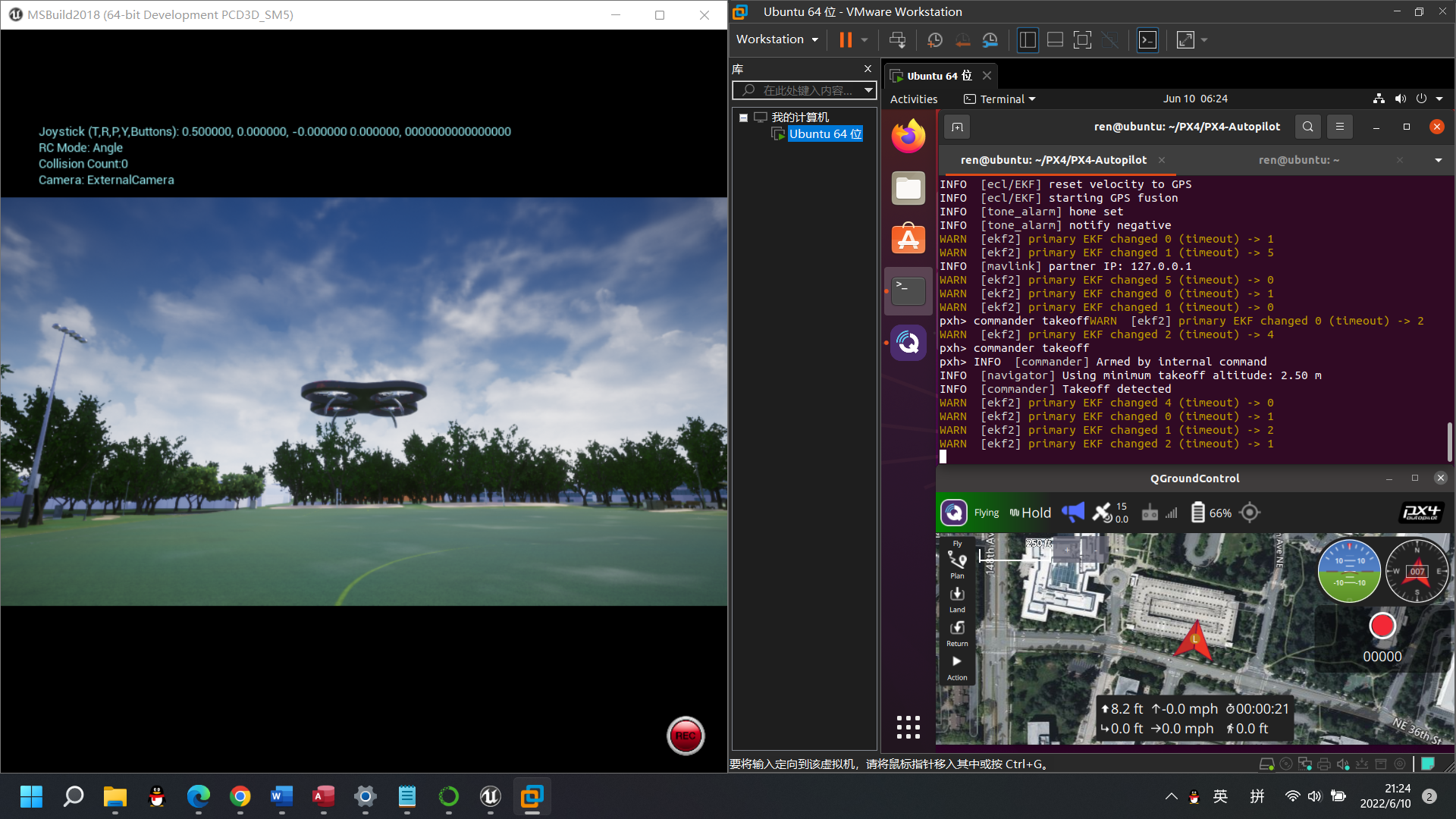
- Formation controlAvailable from both host and client by controlling the primary UAV and allowing followers to track it.
- Environment controlsFully available on the Windows host; the Linux client requires API-mediated changes.
- Data recordingDirect on the host and available remotely through API calls from the client.
- Vehicle switchingSupported on the host; constrained on the PX4 client because changing the bound primary aircraft can break the connection.
Evidence boundary: this thesis establishes a working simulation prototype and documents its engineering behavior. It does not claim high-fidelity correspondence with a physical multi-UAV system, robust large-scale formation control, or experimentally measured performance gains.
Archive context
Why the Chinese thesis belongs here
The original language is part of the work's history, not a barrier to presenting it. Keeping the Chinese title and source files preserves the academic record, while the English overview makes the engineering contribution legible to a broader audience.
As an undergraduate project, it also records an earlier stage of the research trajectory represented by this archive: building interactive simulation systems, connecting virtual environments to external services, and being explicit about what a prototype can and cannot demonstrate.